Engagement Rings
Showing 1–0 of 0 products · Page 1 of 1
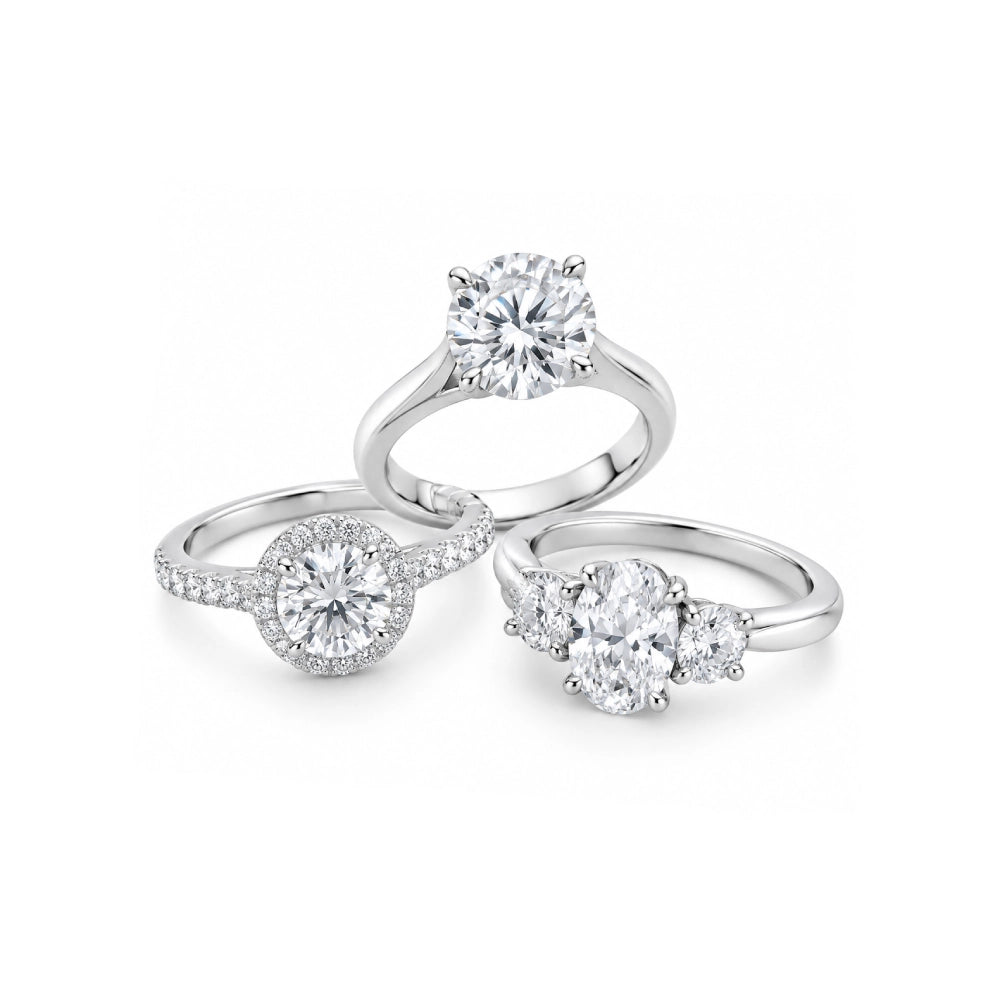
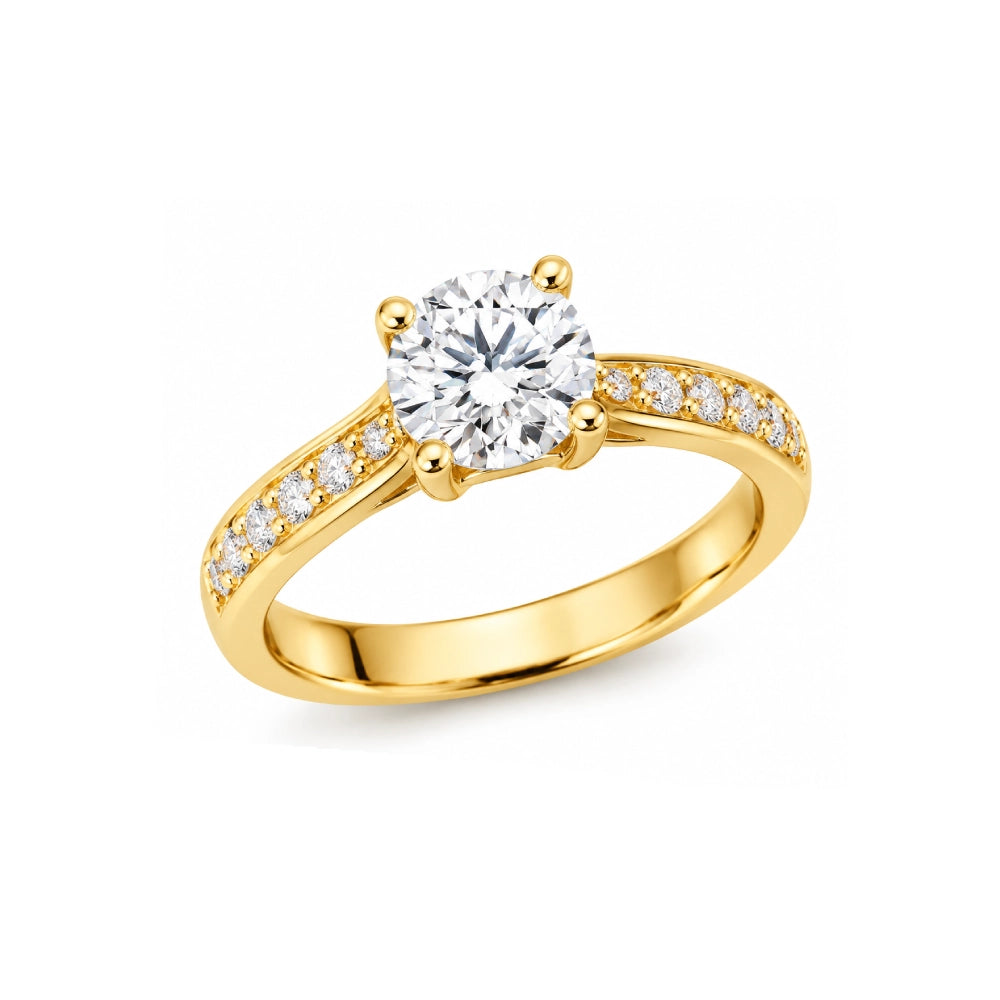
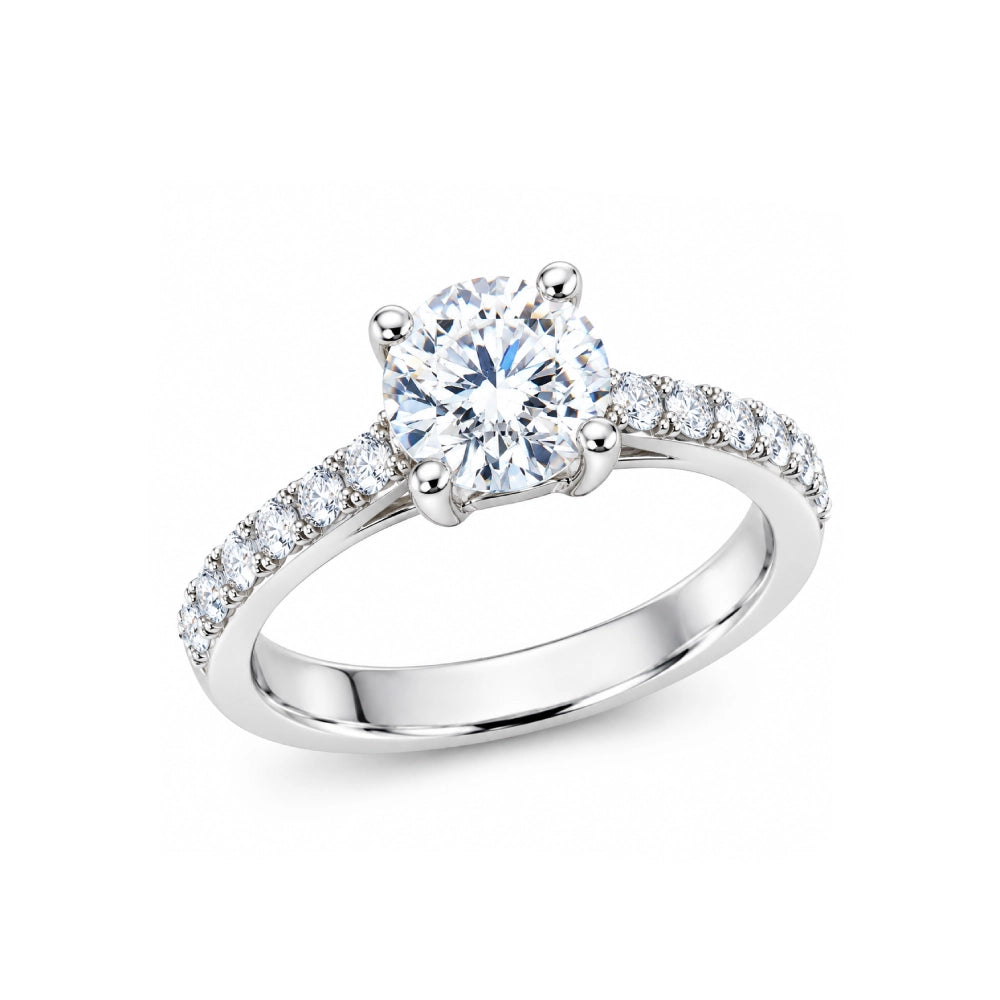

Diamond Engagement Rings in London
Most of the engagement rings we sell are set with natural diamonds. You will find classic solitaires, princess-cut centre stones, emerald cuts with their long, mirror-like facets, marquise and princess combinations, and designs with baguette-cut diamonds along the shoulders. Each product page lists the metal and the diamond's carat weight, and many also show its colour and clarity grade.
If you would like a larger diamond for your budget, our lab-grown diamond collection is worth a look.

Diamond Quality in Plain English
Diamonds are graded on four things, usually called the 4Cs. Here is what they mean when you are standing at the counter.
- Cut is how well the diamond has been shaped and polished. It has the biggest effect on sparkle, so don't compromise on it to gain size.
- Colour runs from D, which is completely colourless, down the alphabet towards a faint yellow tint. Many of our diamonds are graded G or H, which look white to the eye, especially in a white gold or platinum setting.
- Clarity describes tiny natural marks inside the stone. Diamonds graded SI often have no marks you can see without magnification, but it varies from stone to stone, which is a good reason to look at the actual diamond before you buy.
- Carat is weight, not size. Prices rise sharply at round numbers such as 0.50ct and 1.00ct, so a diamond just under those weights can look almost identical for noticeably less.
Choosing a Diamond Shape
| Shape | What it looks like | Things to know |
|---|---|---|
| Round brilliant | The classic round diamond | Gives the most sparkle of any shape |
| Princess | Square with sharp corners | Modern look; the corners need claws to protect them |
| Emerald | Rectangular with long, step-cut facets | Elegant and understated; shows clarity more, so choose a cleaner stone |
| Marquise | Long and pointed at both ends | Looks larger than its carat weight and lengthens the finger |
Which Metal Is Best for an Engagement Ring?
An engagement ring is worn every day for decades, so the metal matters as much as the diamond.
- Platinum is naturally white, so it never needs re-plating. It is dense and hard-wearing, which makes it the most secure metal for the claws that hold a diamond. It costs more than gold.
- 18ct white gold looks very similar to platinum but is usually plated with rhodium for its bright finish. The plating wears and needs renewing now and then, which our repair workshop can do.
- 18ct yellow gold has a warm, rich colour and makes a diamond look bright against it.
- 9ct gold is the most affordable option. It is hard-wearing, though its colour is a little paler than 18ct.
Whatever you choose, plan to buy a wedding band in the same metal. Rings in different metals rub against each other, and the harder one slowly wears down the softer.

Bespoke and Custom Engagement Rings in London
Not every proposal suits a ring off the shelf. There are two ways we can help.
- Custom engagement rings start from one of our designs and change a detail: a different metal, a larger or smaller diamond, or a new ring size. It is usually the quickest and most cost-effective way to get a ring that feels personal.
- Bespoke engagement rings are designed from scratch. We sketch the ring with you, help you choose the diamond, give you a price before work begins and make the ring by hand in our workshop. It is the right route for an unusual stone, a particular style you can't find anywhere, or a design built around a family diamond. Read more about how our bespoke process works, or about resetting an inherited stone through our jewellery redesign service.
If you are planning a proposal for a particular date, tell us at the start so we can plan the work around it.

Natural or Lab-Grown Diamond?
Both are real diamonds. They have the same hardness, the same sparkle and are graded in the same way. The difference is origin and price. A natural diamond formed underground over millions of years, while a lab-grown diamond is created in a controlled environment in a matter of weeks. Lab-grown diamonds cost considerably less, so the same budget buys a bigger or higher-grade stone. Natural diamonds are rarer, and many people value that. We sell both, so you can compare them side by side before deciding.

Getting the Ring Size Right for a Surprise Proposal
- Borrow a ring your partner wears and bring it in. We can measure it for you. Tell us which finger it is usually worn on, because fingers differ in size.
- In the UK, engagement rings are traditionally worn on the fourth finger of the left hand.
- If you are unsure, go slightly larger rather than smaller. A ring that is a little big will still go on for the proposal, and most rings can be resized afterwards.
- Our product pages list common sizes from J to Q. Other sizes are available on request, so contact us or add a note at checkout.

How Much Should You Spend on an Engagement Ring?
There is no right amount. The old idea of spending a set number of months' salary began as a diamond advertising campaign, not as advice. Set a budget you are comfortable with first, then decide what matters most: the size of the diamond, its quality, the metal or the design. Our ready-to-wear engagement rings start at around £1,000 for a small diamond in 9ct gold, and a 1ct diamond in 18ct gold costs considerably more. Tell us your budget and we will show you the best options within it.

See Our Engagement Rings in London
Diamonds look different on a screen than they do in daylight on your hand. Visit our shop at 393 North End Road, Fulham, SW6 1NR, a short walk from Fulham Broadway station. We will show you different shapes, grades and metals side by side and explain the differences without any pressure to buy. We are open Monday to Friday from 9am to 5:30pm and Saturday from 9am to 6pm. If you would like unhurried time with a jeweller, call 020 7381 3411 and we will set time aside.
Frequently Asked Questions
